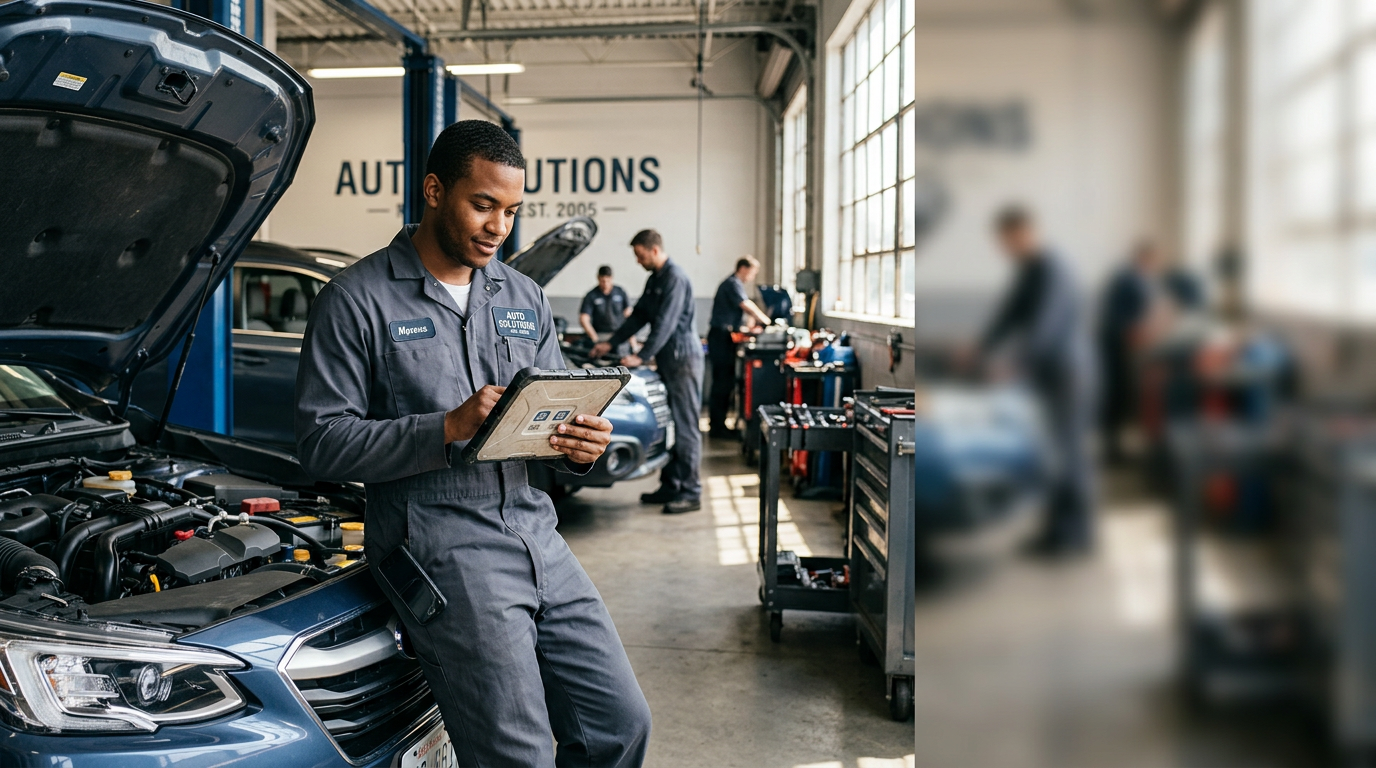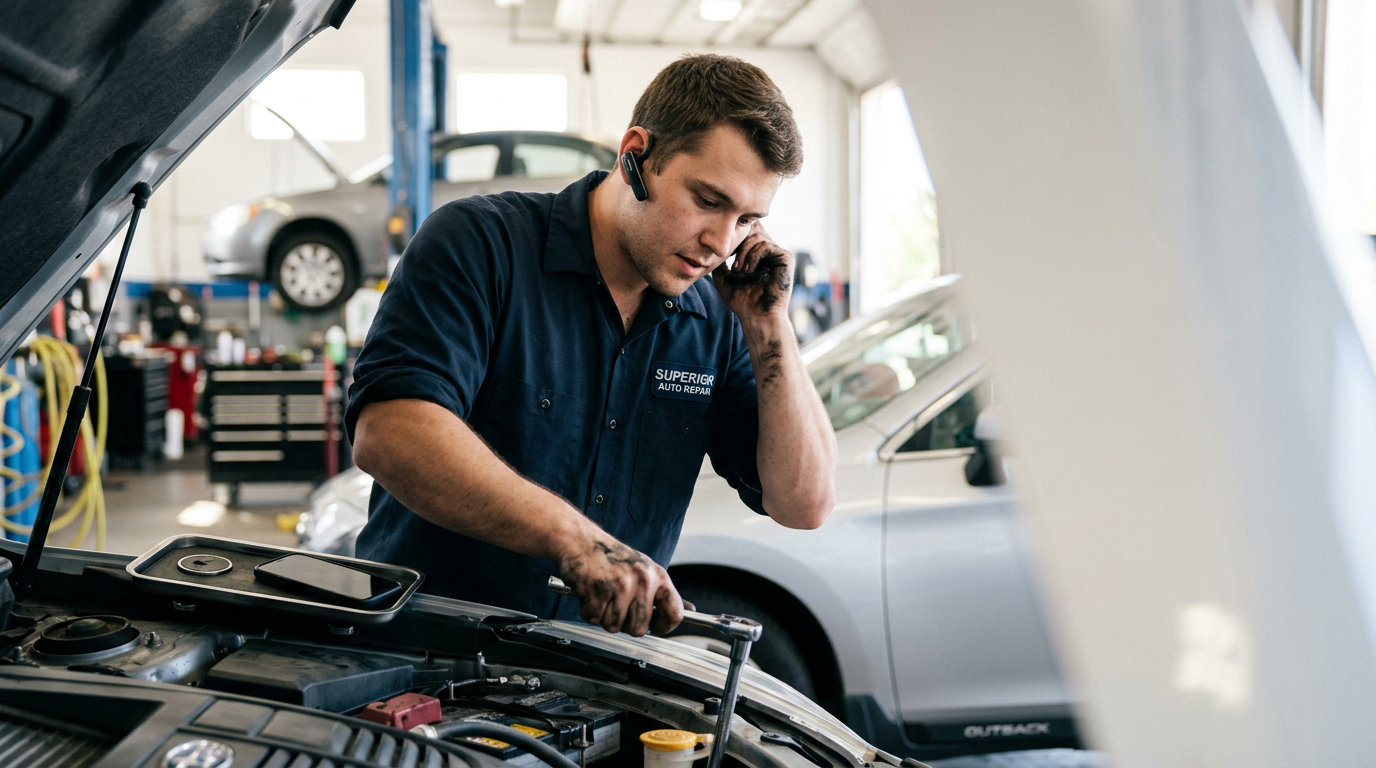
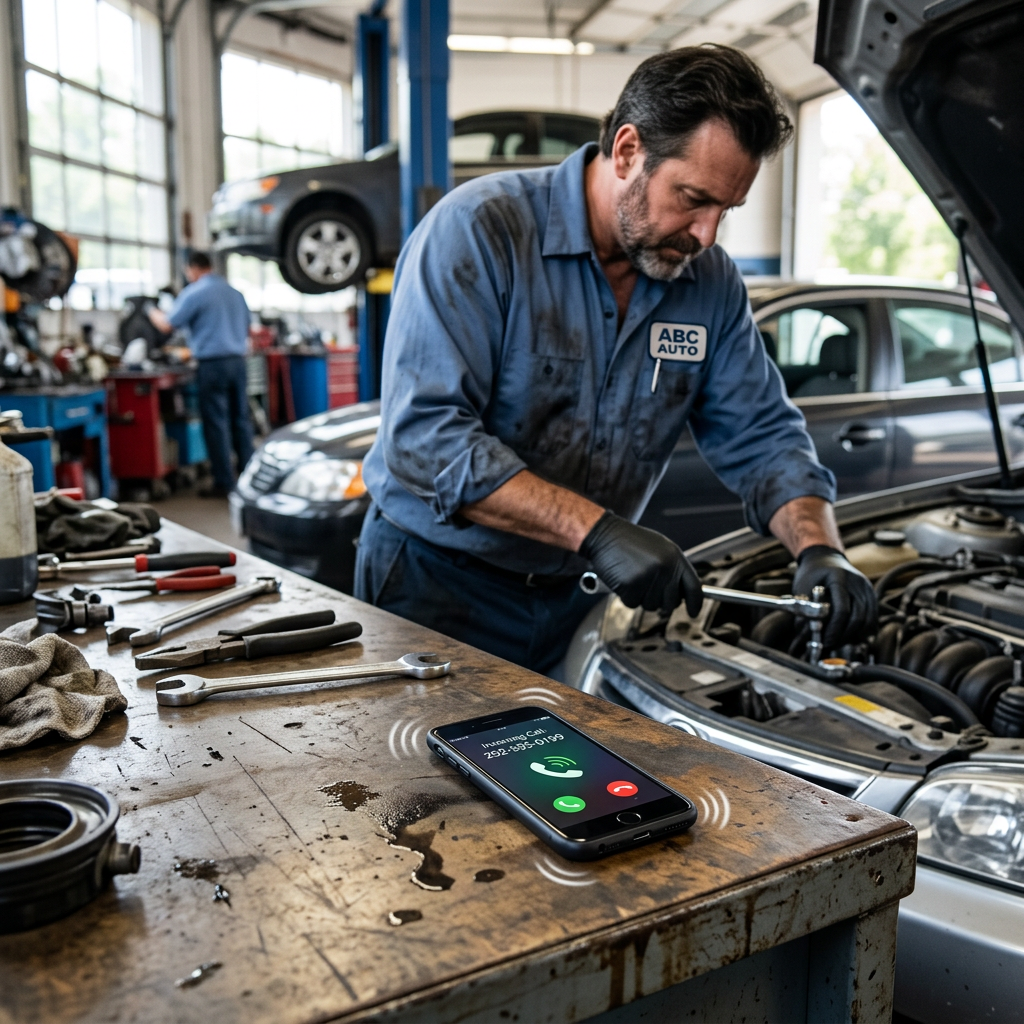
It’s Monday at 8:15 AM. Your bays are full, two customers are waiting at the counter, and the shop phone won’t stop ringing. Your lead technician climbs out from under an oil change to grab the call, tracking grease across the floor while the customer on hold hangs up. Again. That’s three missed auto shop phone calls before you’ve finished your first coffee, and each one probably drove straight to your competitor’s shop down the road.
This isn’t a bad Monday. This is just Monday. And Tuesday isn’t much better.
The problem isn’t that you don’t care about answering the phone. It’s that the phone rings hardest exactly when you’re least able to pick it up. And every call that goes unanswered is revenue walking out the door before it ever walked in.
Auto Shop Phone Calls Are Your Most Valuable Leads
You might think your website or Google listing does most of the heavy lifting for new business. And they help, no question. But when it comes to the actual moment a new customer decides to give you their money, the phone is still where it happens. Most new auto repair customers make their first contact by phone. Walk-ins account for a much smaller share. The rest trickle in through online forms and emails.
That means your phone is your front door. More people come through it than your actual front door.
Now here’s the part that makes it worse. Peak call volume hits during the exact windows when your shop is slammed. AAA automotive services research shows call volume spikes between 7:30 and 9:00 AM and again from 4:30 to 6:00 PM. Those are commute hours. People notice their check engine light on the way to work, or their brakes sound wrong on the drive home, and they call the first shop that comes up.
Monday mornings are the worst. The Automotive Service Association reports that Monday call volume runs 34% higher than the weekly average. Weekend breakdowns, weird noises that showed up on a road trip, the “I’ve been meaning to get this looked at” crowd. They all call Monday morning. While your bays are already backed up from the weekend.
Most independent shops field dozens of calls per day. High-volume urban shops can see 60 or more. That’s a call every 10-15 minutes during business hours. And each one of those calls could be a $400 repair order, or it could be someone asking what time you close. You won’t know which until you answer.
The Real Cost of Missed Auto Shop Phone Calls
Here’s the number that should bother you: the Automotive Service Association puts the missed call rate at about 23% during business hours. Roughly one in four calls goes unanswered. Not because you’re closed. Because everyone’s busy.
Missing 20% or more of your calls means losing potential jobs every single day. The impact compounds over a month and over a year. We’ve broken down what a missed call actually costs a small business in detail, and the math applies directly to auto shops.
But the revenue loss isn’t just about the calls you miss. It’s about the calls that don’t come back. Most callers who don’t reach you on the first try will call a competitor instead. They’ll pick the next shop in their search results. And why wouldn’t they? Their car is making a noise. They want it fixed. They don’t care who fixes it as long as someone picks up the phone.
CallSource, which has been tracking Fixed Ops call data since 2015, found that 60% of calls represent missed opportunities where no appointment gets set. Even more telling: 40% of prospective service appointments end up booking with a competitor. Not because the other shop is better. Because the other shop answered.
Hold times make it worse. The Car Wars 2024 report found that the average dealer hold time is 3 minutes and 5 seconds. According to the same report, hold times over 2 minutes increase hang-ups by 40%. Nearly a third of unconnected calls come from people who were put on hold and gave up. They called you. They wanted to give you their business. And they hung up because nobody came back to the line.
Why Technicians Shouldn’t Be Your Phone Strategy
In a lot of small shops, the unspoken phone plan is “whoever can grab it.” Most of the time, that means a technician. And that creates problems that go way beyond a greasy handset.
When a tech steps away from a repair to answer the phone, the clock doesn’t stop. The car on the lift is still taking up bay space. The customer waiting for that car is still waiting. And the tech, who was focused on a diagnostic or a brake job, now has to mentally shift to customer service mode, answer questions, maybe look something up, and then try to get back into the flow of the repair. That context-switching costs time. And in a shop, time is literally money.
Many technicians rely on personal devices in the bay. But personal phones don’t solve the shop phone problem. They create new ones: liability concerns, distractions, and no way to track or route calls properly. A tech texting a customer back from their personal number isn’t a phone system. It’s a workaround that breaks down the moment that tech is off sick or leaves for another shop.
The real cost is in labor productivity. Every minute a technician spends on the phone is a minute they’re not turning a wrench. For shops that bill labor at $130 per hour or more, that’s over $2 per minute in lost productive time. Multiply that across a dozen calls a day and you’re paying your highest-skilled employees to do a job that doesn’t require their skills at all.
Your techs went to school to fix cars. They’re good at it. Asking them to also be your receptionist is like asking your receptionist to rotate tires. It doesn’t make sense, and everyone involved knows it.
Three Ways to Capture Calls Without Pulling Techs Off Jobs
The goal is simple: every call gets answered, and nobody has to crawl out from under a car to do it. Here are three approaches that work, depending on your shop’s size and budget.
Set up a call triage system during peak hours. If you have a service advisor or front counter person, make sure they’re freed up during the 7:30-9:00 AM and 4:30-6:00 PM rush windows. That might mean shifting some administrative tasks to mid-morning or early afternoon. If you don’t have dedicated front desk staff, this is where an AI receptionist earns its keep. It picks up every call, answers common questions (hours, location, whether you work on their make and model), and books appointments for routine services. Your techs never hear the phone ring.
Use smart call routing to prioritize what matters. Not every call needs the same response. Someone calling to schedule an oil change doesn’t need to talk to your master tech. Someone calling about a transmission concern probably does. Call routing, whether through a phone system or an AI receptionist trained on your business, can direct routine scheduling to be handled on the spot. Complex questions get routed to the right person at the right time, with context so they don’t have to start from scratch. This is similar to what we’ve seen in healthcare practices dealing with hold time issues. The principle is the same: get the right calls to the right people, and handle the rest automatically.
Automate appointment scheduling for common services. Oil changes, tire rotations, brake inspections, state inspections. These are predictable services with predictable time slots. There’s no reason a human needs to be involved in booking them. An AI receptionist can check your availability, book the appointment, and send a confirmation, all while the caller is still on the line. According to Auto Dealer Today’s 2022 research, 81% of service customer pay labor comes from phone calls, yet 57% of service advisors don’t even ask for the appointment. Automating the booking process means the appointment gets asked for and confirmed every single time.
If you’re curious how this works for automotive businesses specifically, we’ve built our AI receptionist to handle the exact calls your shop gets every day.
How Answering Faster Converts More Auto Shop Phone Calls
Speed matters more than you think. Research consistently shows that answering quickly significantly improves booking rates. Every extra ring drops the likelihood that the caller will actually schedule an appointment. By the time you get to ring six or seven, you’ve already lost a big chunk of your conversion potential. And that’s assuming they don’t hang up first.
After-hours response time matters too. Responding to after-hours inquiries quickly captures significantly more leads than slower responses. Think about that Saturday night caller whose car won’t start. If they get a response right away, even an automated one that books them for Monday morning, you’ve got the job. If they hear voicemail, they’re calling someone else Sunday morning.
Then there’s hold time. The Car Wars 2024 report data is clear: hold times over 2 minutes increase hang-ups by 40%. Two minutes. That’s how long it takes to walk from the bay to the front desk, wash your hands, and pick up the phone. By then, four out of ten callers have already gone.
The pattern is consistent across industries. We’ve seen the same dynamics with contractors losing leads between jobs. The businesses that respond fastest win the work. Not because they’re better at the work. Because they were there when the customer was ready to buy.
An AI receptionist answers on the first ring. Every time. At 8:15 on a Monday morning, at 9:30 on a Saturday night, and at 2 AM when someone’s car gets towed and they’re looking for a shop that opens early. It doesn’t put anyone on hold. It doesn’t track grease across the floor. It just picks up and handles it.
What to Do This Week
Before you change anything, measure what’s happening now. For one week, track how many calls come in during your peak hours and how many go unanswered. Most phone systems can pull this data. If yours can’t, just have someone tally it on a clipboard at the front counter.
You’ll probably be surprised by the number. Most shop owners are.
Once you see how many calls you’re missing, the decision gets a lot simpler. You can hire a dedicated receptionist, restructure your front desk coverage, or set up an AI receptionist that handles it 24/7 for a fraction of the cost. The right answer depends on your shop, your volume, and your budget.
If you want to hear what an AI receptionist sounds like handling a real auto shop call, give ours a ring at +1 587-742-8858. It’s trained on automotive service calls and it picks up on the first ring. Then decide for yourself whether it beats having your lead tech answer the phone with greasy hands and a customer on the lift.