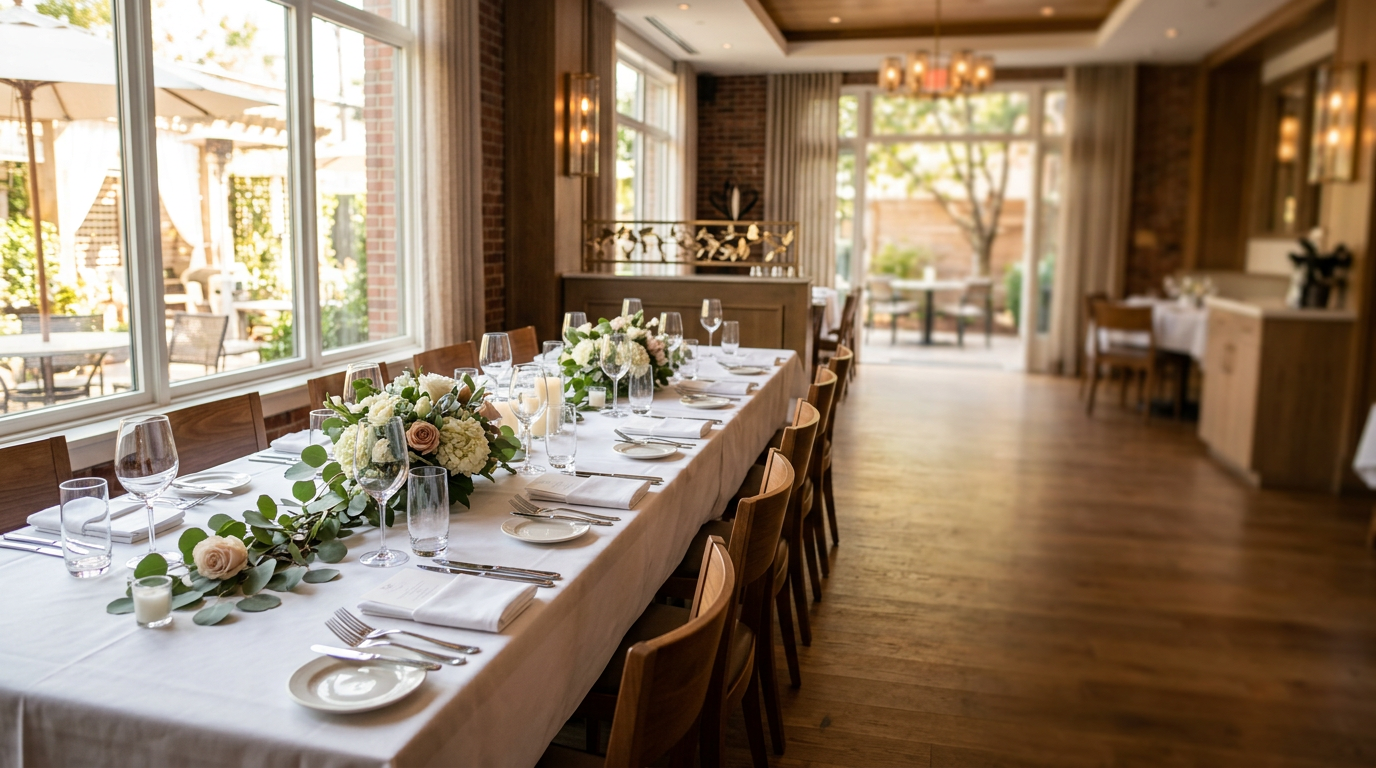
It’s Friday night dinner service. Your host stand phone rings for the third time in 10 minutes. You’re triple-seated, a server just called out, and the bartender is drowning. You let it go to voicemail. Totally reasonable. Except that call was a corporate event planner looking to book your private dining room for a 50-person holiday party. That single restaurant private event phone inquiry, the one nobody picked up, represented thousands in guaranteed revenue. And it just went to the next place on her list.
This happens more often than most restaurant owners realize. Not because they don’t care about private events, but because those inquiries come in at the worst possible times. And the systems most restaurants rely on to catch them simply aren’t built for the job.
Private Events Can Boost Restaurant Revenue by 30% or More
If you’ve hosted private events before, you already know they’re a different animal than regular service. Better margins. Predictable headcounts. Less waste. But the numbers behind them are worth spelling out, because they explain why a single missed call stings so much.
According to industry data, venues that actively manage event bookings see revenue increases of 30% or more from that channel alone. That’s not replacing your regular dinner service. That’s layered on top of it.
Private event guests spend 50-100% more per head than your typical walk-in diner. Part of that is premium packages and add-ons. Part of it is the nature of the occasion. People celebrating, impressing clients, or hosting a team dinner aren’t watching the bill the same way a couple on a Tuesday night might.
Hosts typically spend around $130 per guest on private events. For a 50-person booking, that’s committed revenue you can plan around. Pre-set menus mean you order exactly what you need. Confirmed headcounts mean you staff exactly right. Food waste drops to near zero. For corporate events especially, restaurants can hit 40% margins or higher by controlling labor and locking in the menu ahead of time.
Compare that to a regular Friday night where you’re guessing how many covers you’ll do, prepping for a range, and hoping you don’t over-order the halibut. Private events take the guesswork out.
There’s also the off-peak angle. Private events fill your dining room on slow nights. According to OpenTable’s 2024 data, midweek seated diners rose 11%, the biggest jump on any day of the week. Corporate groups and social gatherings often prefer Tuesdays, Wednesdays, and Thursdays. That’s revenue during hours when your fixed costs are running whether the room is full or not.
Why a Restaurant Private Event Phone Inquiry Slips Through the Cracks
Here’s the frustrating part. The calls are coming in. You’re just not in a position to answer them.
Most private event inquiries arrive during peak service hours. That makes sense from the caller’s perspective. They’re at work during the day, thinking about the office holiday party over lunch, and picking up the phone between meetings or on their evening commute. They call when it’s convenient for them, which is exactly when it’s least convenient for you.
Your host is juggling a wait list, seating a six-top, and answering questions about the gluten-free options. When the phone rings, they’re doing triage. A quick “Can I put you on hold?” turns into a three-minute wait the caller won’t sit through. Or worse, the host picks up, hears “private event,” and treats it like just another reservation call. They jot a name on a sticky note that ends up under a stack of server checkouts.
This is the same problem that hits every small business that depends on phone calls for revenue. The highest-value calls arrive when you’re least able to handle them properly.
Voicemail doesn’t save you either. Event planners, especially corporate ones, are comparing three or four venues at once. They’re calling down a list. If they get your voicemail, they move to the next name. By the time you listen to the message the next morning, they’ve already had a conversation with your competitor, gotten a quote, and maybe even put down a deposit.
The inquiry didn’t slip through because you don’t care about private events. It slipped through because your restaurant wasn’t set up to catch it at the moment it arrived.
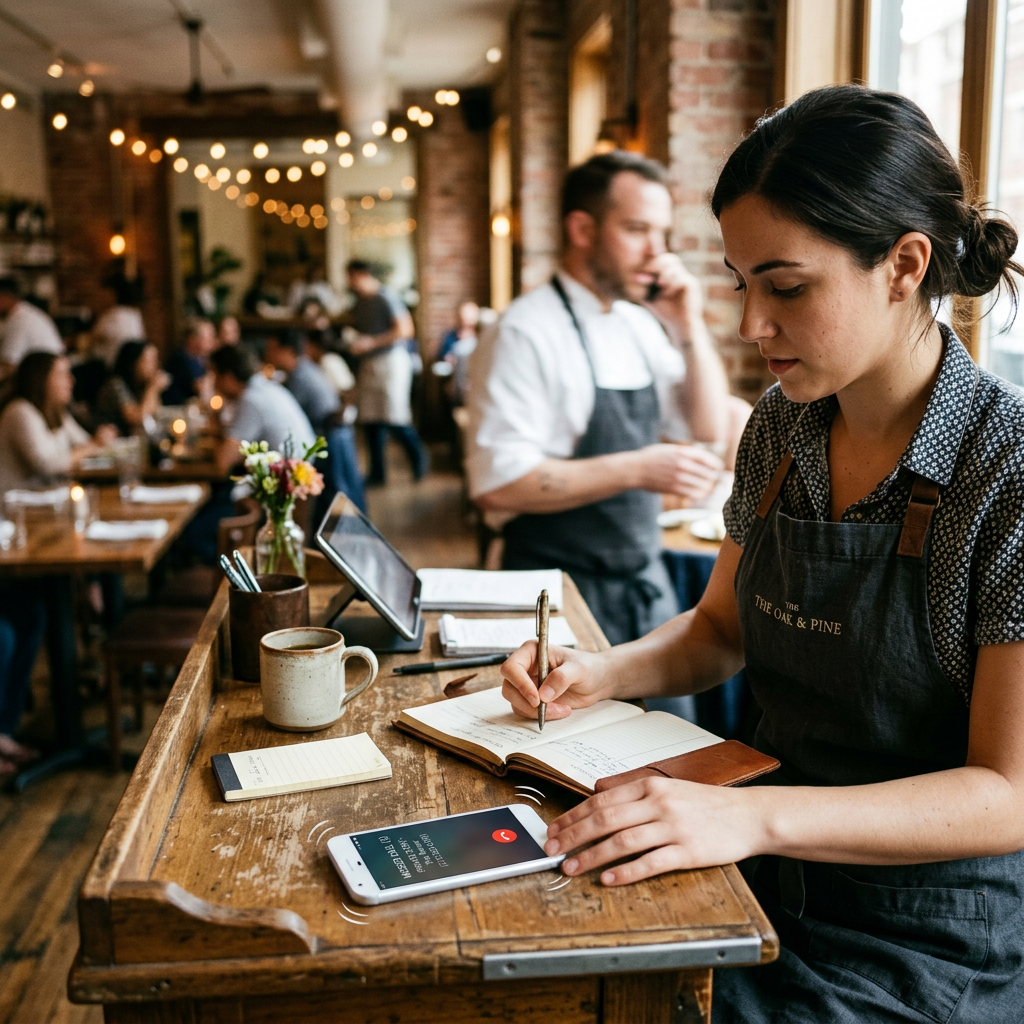
What One Missed Private Dining Call Actually Costs You
Let’s make this concrete. Not with made-up projections, but with the kind of math you can apply to your own restaurant.
At $130 per guest, which is the typical host spend on private events, a 50-person booking represents committed revenue you can plan around. And unlike a regular Friday night where no-shows and late cancellations eat into your numbers, private events usually require deposits or full pre-payment. The money is committed before the first guest walks in.
But the direct revenue from one event isn’t even the full picture. Private events introduce your restaurant to people who might never have walked through the door otherwise. A corporate group of 50 means 50 potential regulars who now know your food, your space, and your service. If even a handful come back for date nights or bring friends, that one event keeps paying dividends for months.
There’s also the referral chain. Corporate planners who have a great experience at your place tend to book with you again. They don’t want the risk of trying somewhere new when their boss is expecting a polished evening. One good event turns into two or three bookings a year from the same company, plus word-of-mouth referrals to other planners in their network.
Now think about what happens when that same planner has a bad experience. Not bad food or bad service. Just no answer. No callback. No acknowledgment that they tried to give you their business. That’s not a neutral outcome. That’s a negative impression of your restaurant that gets carried to every future booking decision.
One missed private dining call doesn’t just cost you one event. It costs you the relationship that event would have started.
Three Systems That Capture Every Private Dining Inquiry
You don’t need a full-time events coordinator to stop losing these calls. You need a few simple systems that make sure every inquiry gets a real response, even when your dining room is on fire.
A dedicated event line with smart routing. Separate your private event number from your main reservation line. During service hours, route it to a manager’s cell or to an AI receptionist that can collect the caller’s details, answer basic questions about your space and availability, and confirm that someone will follow up within 24 hours. The caller gets a real interaction instead of a voicemail. You get the lead captured without pulling your host off the floor. This is the same principle that works for restaurants and hospitality businesses across the board: make sure the phone gets answered, no matter what’s happening in the building.
Automated SMS follow-up for after-hours inquiries. When someone calls about a catering phone inquiry at 9pm on a Saturday, they know you’re busy. They’re not offended that you didn’t pick up. But they do expect some kind of acknowledgment. An automatic text that says “Thanks for your interest in private dining at [your restaurant]. We’ll have our events manager reach out by Monday at noon” costs you nothing and keeps the lead warm. It tells the caller they’ve been heard, which is often enough to keep them from calling the next place on their list.
Staff training to identify and escalate event calls immediately. Your hosts need to know that a private event inquiry is not a regular reservation call. It’s a different category entirely. Train them on two things: how to recognize an event call (keywords like “group,” “private room,” “corporate dinner,” “party for 30”) and what to do with it (take a name and number, confirm a callback time, hand it to a manager before the end of their shift). A 30-second interaction at the host stand can save a booking worth thousands. The key is making sure your team understands the difference in value, not just the difference in process.
How Technology Turns a Missed Call Into a Booked Event
The systems above work. But they work better when technology makes them faster and more reliable.
An AI receptionist, for example, answers every call on the first ring. It doesn’t matter if it’s 2pm on a Tuesday or 9:30 on a Friday night mid-rush. When a corporate planner calls about booking your private dining room, the AI picks up, asks the right questions, collects contact details, and sends the information to your events manager. No voicemail. No sticky notes. No “I forgot to tell you someone called about a party.”
This matters because the calls that come in at the worst time are often the most valuable ones. The planner calling during Friday dinner service is the one with urgency. They need a venue soon. They’re ready to commit. And they’re going to book with whoever responds first.
According to the National Restaurant Association’s 2024 State of the Restaurant Industry report, a majority of restaurant operators planned to increase their technology spending, with event and booking management among the top priorities. That’s not restaurants chasing trends. That’s restaurants recognizing that their current systems are leaking money.
CRM tools add another layer. When an inquiry comes in, it gets logged, tagged, and scheduled for follow-up automatically. No one has to remember to check the voicemail or dig through a pile of callback slips. The system tracks where each lead is in the process: initial inquiry, quote sent, deposit received, event confirmed. If someone falls through the cracks, you see it before it’s too late.
Integrated calendars prevent the other nightmare scenario: double-booking your private space. When your events calendar syncs with your reservation system, you can confirm availability in real time. The AI receptionist or your online booking page can tell a caller immediately whether their preferred date is open, instead of promising to “check and get back to you,” which adds friction and gives the caller time to book elsewhere.
Restaurants that invest in dedicated event booking systems often see significant returns within the first year. That tracks with what you’d expect. When every inquiry gets a response and every lead gets followed up on, you stop losing bookings to your voicemail. The math isn’t complicated. More answered calls means more booked events.
If you’re already dealing with the cost of poor lead follow-up in other parts of your business, the same principles apply here. Speed and consistency win. The venue that responds first with the right information gets the booking.
Your Private Dining Room Doesn’t Fill Itself
The room is there. The kitchen can handle it. Your staff knows how to execute a great event. The bottleneck isn’t your ability to deliver. It’s your ability to catch the inquiry when it comes in.
Every restaurant private event phone inquiry that goes to voicemail is a real person with a real budget, choosing between you and two or three other places. The one who picks up first, asks the right questions, and follows up quickly is the one who books the event. That’s not a technology problem or a staffing problem. It’s a systems problem. And systems can be fixed.
If you want to hear what it sounds like when every call gets answered, even during your busiest service, call our AI receptionist at +1 587-742-8858. It takes about 30 seconds to understand why an event planner would rather talk to it than leave you a voicemail.