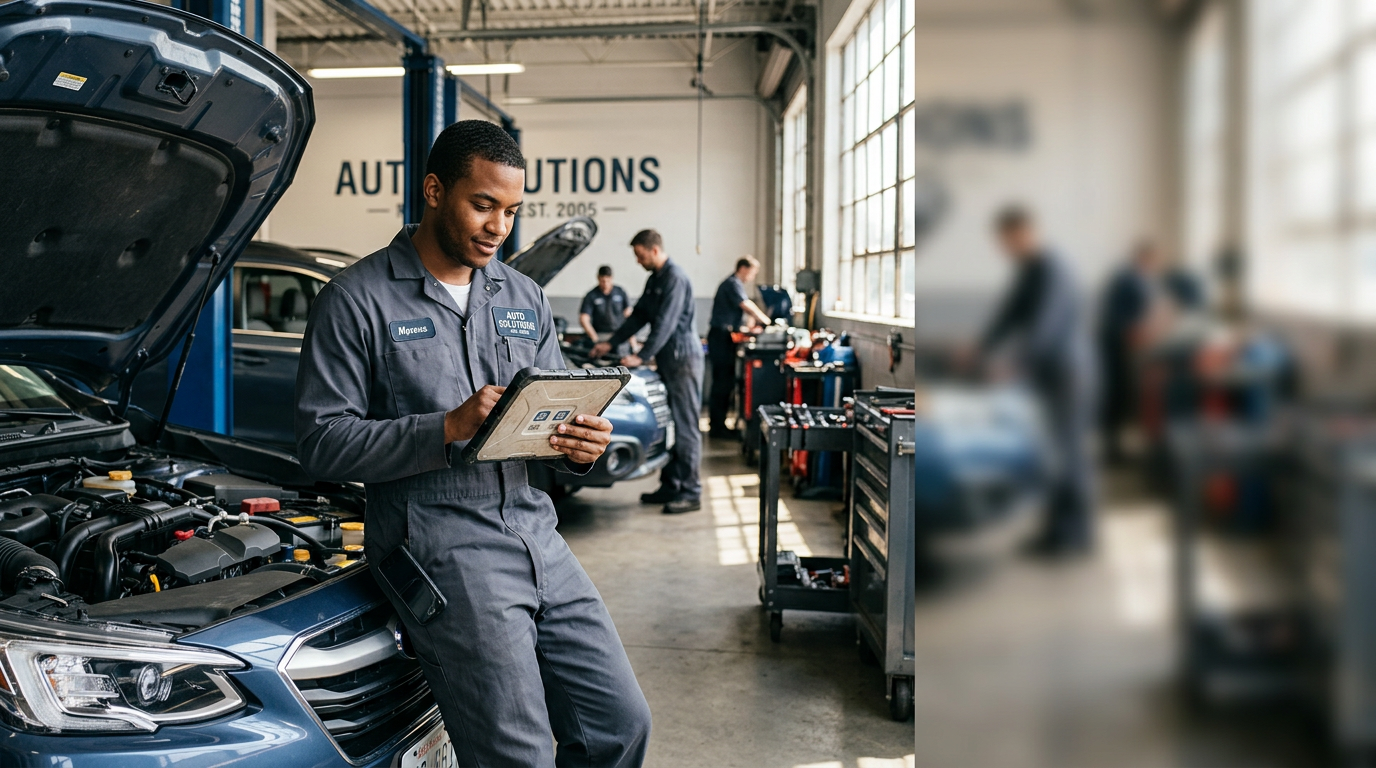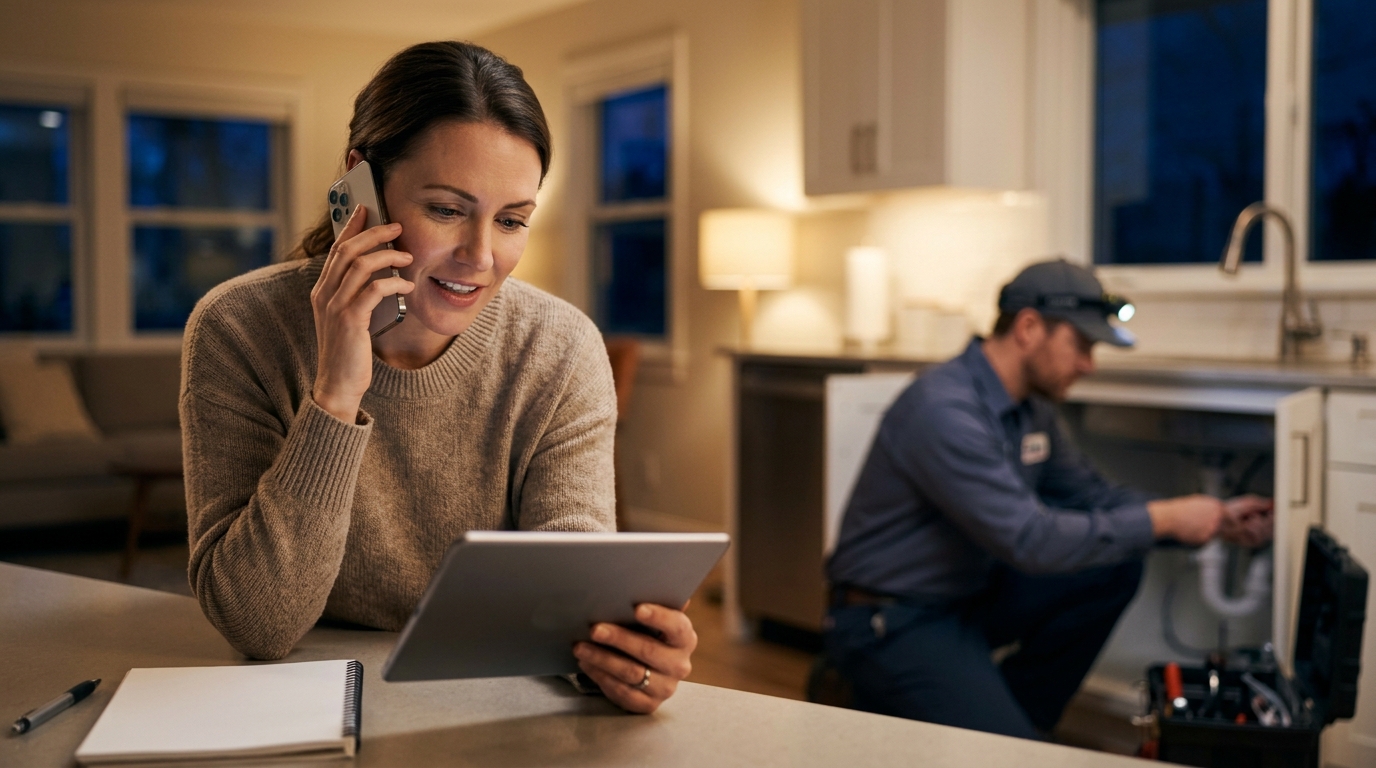
It’s 8:30 PM on a Tuesday. A homeowner notices water staining spreading across their ceiling. They grab their phone, search “emergency plumber near me,” and tap your listing. Your Google profile says “24/7 emergency service.” The phone rings twice and rolls to voicemail. They hang up, scroll to the next result, and call your competitor. By the time you check your messages Wednesday morning, that job is gone. That’s how after hours calls in home services work: fast, high-stakes, and unforgiving to whoever doesn’t pick up.
This isn’t an edge case. It’s happening to home services businesses every single night. And the data on just how much business flows through after-hours calls might change the way you think about your phone coverage.
After-Hours Calls Make Up Nearly Half Your Potential Business
Most home services businesses operate on a roughly 8-to-5 schedule. That feels normal. But your customers don’t have problems on a schedule, and they don’t search for help on one either.
A 2026 analysis of over 50 service businesses found that shutting off phones at 5 PM means missing 35 to 45 percent of all inbound calls. That’s not a sliver of your business. That’s nearly half of it, ringing into the void.
It gets worse. A 2024 study across 40 service industries, including plumbing, HVAC, and pest control, found that 40 to 60 percent of revenue-generating calls happen outside normal business hours. And only 12 percent of those calls were being answered effectively. The rest went unanswered.
Even online bookings tell the same story. According to a 2026 home services marketing report based on CallRail data, 41 percent of jobs booked online come in after standard operating hours. Whether it’s a phone call or a web form, your customers are making decisions in the evening. If you’re not available to meet them there, someone else will be.
Why Homeowners Call After Hours (And Why It Matters)
There are three main reasons your phone rings at 9 PM, and each one represents a different kind of opportunity.
The first is emergencies. A burst pipe, a dead furnace in January, an electrical fault that trips the whole panel. These problems don’t politely wait for business hours. Homeowners facing an unexpected leak or outage need immediate reassurance that help is on the way. Even if you can’t roll a truck until morning, the simple act of answering and saying “we’ve got you scheduled for first thing” locks in the job. Silence sends them to Google for the next name on the list.
The second reason is simpler: evening is when people finally have time. During the day, your customers are at their own jobs. They notice the slow drain in the morning, think about it at lunch, and finally sit down after dinner to do something about it. Research from the same 2026 call analysis shows that 38 to 42 percent of calls come in during the 6 to 9 AM and 5 to 10 PM windows. That’s when homeowners are home, available, and ready to deal with things they’ve been putting off.
The third reason is expectation. According to CallRail’s 2026 home services data, 98 percent of consumers search online before hiring a home services business. When they find you on Google at 8 PM and your listing says you’re available, they expect to reach someone. Customers factor your availability into their decision before they ever call. If your online presence says “always available” but your phone says otherwise, you’ve broken a promise before the relationship even starts.
The Real Cost of Unanswered After-Hours Calls
When an after-hours call goes to voicemail, the cost isn’t just one missed job. It ripples outward in ways that compound over time.
The most immediate cost is the lost lead. Homeowners dealing with a backed-up drain or a pest problem aren’t going to leave a voicemail and wait patiently. They’re going to call the next contractor on the list. According to plumbing industry answering service data, each emergency plumbing call can represent $250 to $750 in revenue. Miss a few of those a week and the numbers add up fast. One pest control company in Austin discovered they were losing roughly 18 jobs every three weeks to unanswered after-hours calls. That’s 18 customers who called, got no answer, and hired someone else.
Then there’s the marketing waste. Many home services businesses spend $2,000 to $5,000 a month on Google Local Services Ads or social media advertising. That money is designed to make your phone ring. But if 40 percent of those calls come after 5 PM and nobody’s there to answer, a significant chunk of your ad budget is essentially paying to send leads to your voicemail. You’re buying the opportunity and then fumbling it. As we’ve covered in our breakdown of what a missed call actually costs, the true price goes well beyond the single lost job.
And then there’s reputation. When homeowners in a crisis can’t reach you, it doesn’t just cost the job. It costs the review, the referral, and the repeat business. Customers who feel ignored during urgent situations are far more likely to leave negative reviews. And according to CallRail’s 2026 report, 81 percent of homeowners rely on Google reviews to choose a home services business. Your availability shapes your online reputation whether you realize it or not.
After-Hours Callers Are Your Most Valuable Leads
Something that surprises a lot of business owners: the calls that come in after hours are often worth more than the ones that come in at 2 PM.
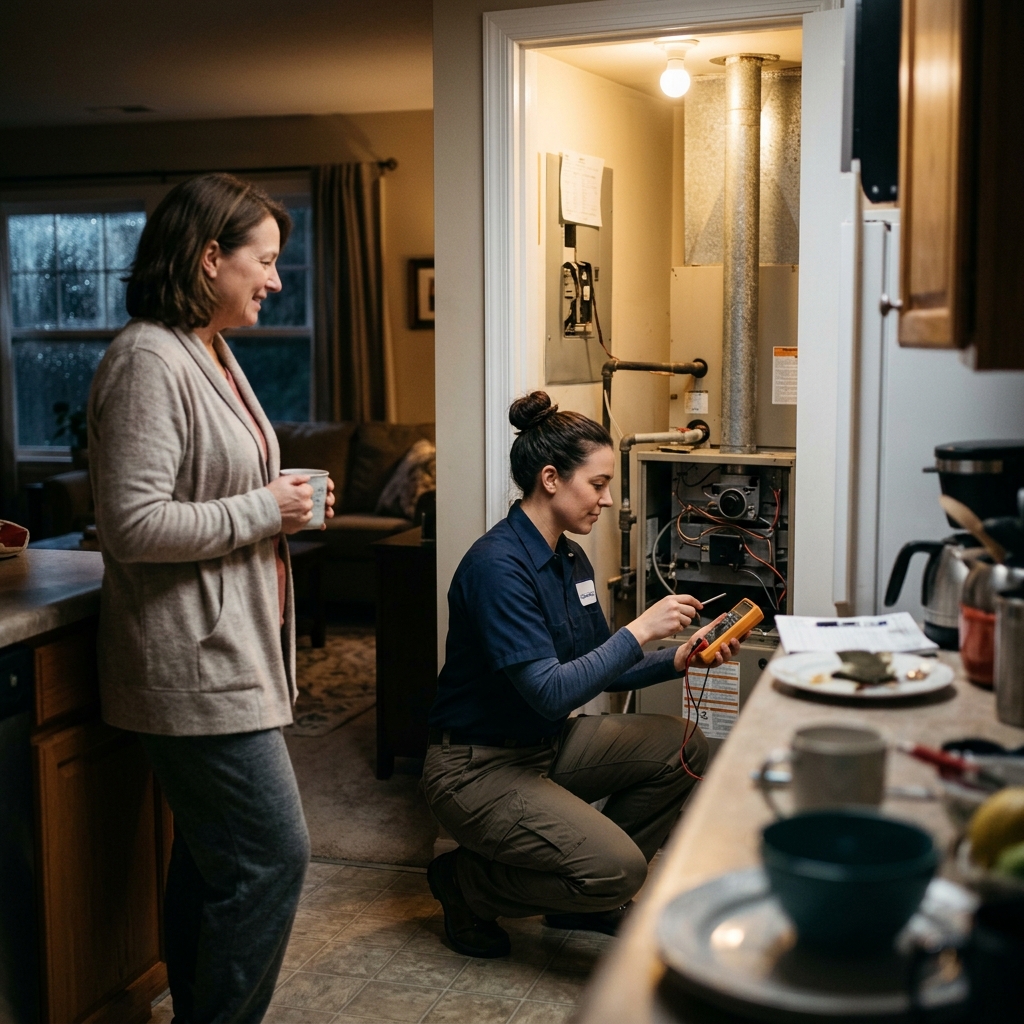
The reason is intent. Evening callers have usually already done their research. They’ve compared a few options online, read some reviews, and narrowed it down. By the time they pick up the phone at 8:30 PM, they’re not browsing. They’re ready to book. The 2026 after-hours call analysis specifically notes that after-hours callers tend to be worth more per call than daytime callers because they’ve already moved past the research phase.
Emergency calls are even more valuable. These are high-ticket, high-margin jobs by nature. A burst pipe at 10 PM isn’t a $75 service call. It’s a $500-plus job with urgency pricing that most homeowners expect and accept. Plumbing answering service data shows that when companies start answering these calls instead of sending them to voicemail, they see an average 23 percent increase in appointment bookings. That’s not a small bump. That’s nearly a quarter more booked jobs, pulled from calls that were previously going nowhere.
Think of it this way: your daytime calls include tire-kickers, price-shoppers, and people who are “just getting a few quotes.” Your after-hours callers are people with a problem they need solved now. If you’re going to invest in answering one group better, the evening crowd is where the money is. For plumbing businesses specifically, the annual cost of missed calls can be staggering.
What Homeowners Expect When They Call After Hours
You might assume that people calling at 9 PM understand they’ll get a voicemail. They don’t. Or more accurately, they don’t accept it.
According to CallRail’s 2026 home services data, 97 percent of homeowners say response speed influences who they hire. Not “somewhat influences.” Determines. When a homeowner is choosing between two plumbers or two HVAC companies, the one who responds first almost always wins. That’s true at 2 PM and it’s just as true at 9 PM.
And despite all the apps, forms, and chat widgets available, 60 percent of customers still prefer to call a business after finding them online. The phone is still the primary way homeowners connect with home services companies. For someone standing in a puddle in their basement, typing out a contact form isn’t going to feel like enough. They want to talk to someone.
Homeowners don’t necessarily expect a technician at their door at midnight. What they expect is acknowledgment. They want to know someone heard them, understands the problem, and has a plan. “We’ve got you down for 7 AM, first appointment of the day” is often all it takes to stop them from calling your competitor. Even if the actual service happens the next morning, the decision to hire you was made the night before, because you picked up.
How After Hours Calls in Home Services Get Lost (And How to Stop It)
The good news is that you don’t need a full night shift to answer after-hours calls. Even basic coverage makes a real difference, and the data backs that up.
Consider the pest control company in Austin we mentioned earlier. They weren’t losing jobs because of bad service or high prices. They were losing them because nobody answered the phone after 5 PM. Their fix was straightforward: an automated after-hours workflow that confirmed appointments via text and notified the team through an alert system. The result was 18 additional jobs in three weeks from calls that previously went to voicemail. No extra trucks. No overtime. Just answering the phone differently.
Professional answering services show similar results. Data from plumbing industry providers shows that customer satisfaction scores improve by up to 31 percent when calls are answered professionally and promptly, including after hours. That’s not just a feel-good metric. Higher satisfaction means better reviews, more referrals, and more repeat business.
Call tracking also plays a role. Businesses using call tracking see a 20 percent reduction in cost per lead and a 7 percent increase in call-to-close rates, according to CallRail’s 2026 data. The reason is simple: when you can see which calls you’re missing and when, you can fix the gaps. Most businesses don’t even know how many after-hours calls they’re losing until they start measuring. As we’ve written about in our piece on the 128 hours a week your business has no one answering the phone, the gap between when you’re open and when customers need you is bigger than most owners realize.
An AI receptionist handles this differently. It picks up every call, day or night, and handles it the way you would if you weren’t busy. It answers common questions, books appointments, and doesn’t let leads disappear because you were asleep or on another job. There’s no voicemail, no hold music, and no “we’ll get back to you.” Just a conversation that feels like calling a real business, even at 11 PM on a Saturday.
Your Competitors Are Already Answering After-Hours Calls
The U.S. home services market exceeds $524 billion annually, and according to CallRail’s 2026 report, 75 percent of home services businesses expect revenue growth this year. That’s a lot of competition for every phone call. And 72 percent of home services businesses plan to increase their marketing budgets, which means more ads driving more calls, including more after-hours calls.
In a market where everyone is spending more to get the phone to ring, the winner isn’t just the business that buys the most ads. It’s the one that answers the most calls, especially the ones that come in after 5 PM. If your competitor answers at 9 PM and you don’t, it doesn’t matter that you’ve been in business longer or do better work. They got the job because they picked up.
And because 86 percent of consumers won’t answer a call from a number they don’t recognize, you often only get one shot. When a homeowner calls you, that’s your window. If you miss it, calling them back tomorrow morning from an unknown number means there’s a good chance they won’t even pick up.
The Fix Doesn’t Have to Be Complicated
You don’t need to be awake 24 hours a day. You don’t need to hire a night dispatcher. You need a way to make sure that when your phone rings after hours, something useful happens instead of nothing.
That could be an answering service. It could be an automated text-back system. It could be an AI receptionist that’s trained on your business, knows your services, and books appointments on your behalf while you sleep. The right answer depends on your call volume, your budget, and how much control you want over the experience.
But the wrong answer is voicemail. Every night that your phone rolls to a generic recording, you’re handing jobs to whoever picks up first. And in a market where nearly half of all calls come after hours, that’s not a small leak. It’s a flood.
If you want to hear what it sounds like when an AI receptionist answers your phone, call ours at +1 587-742-8858. It picks up on the first ring, any time of day. Try it tonight and see for yourself.